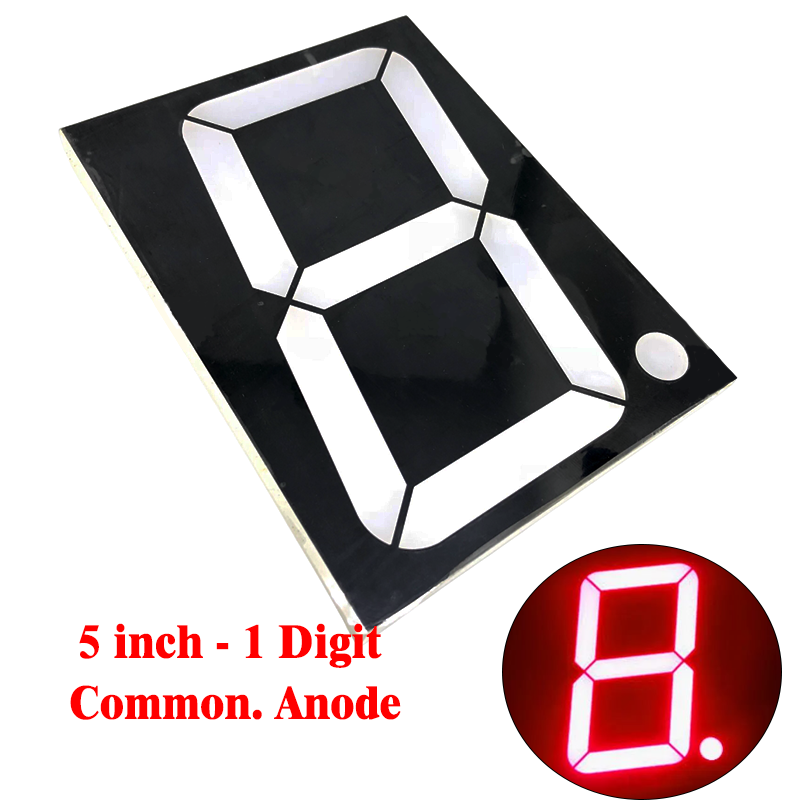
Single Digit 7 Segment 5 Inch Com.Anode - Red - 50101BS
SKU: 1725543
Pick up from store
Shipping 2-3 business days
Description
The 50101BS is a large, single-digit, 5-inch (127mm) 7-segment LED display module, typically featuring a common anode configuration
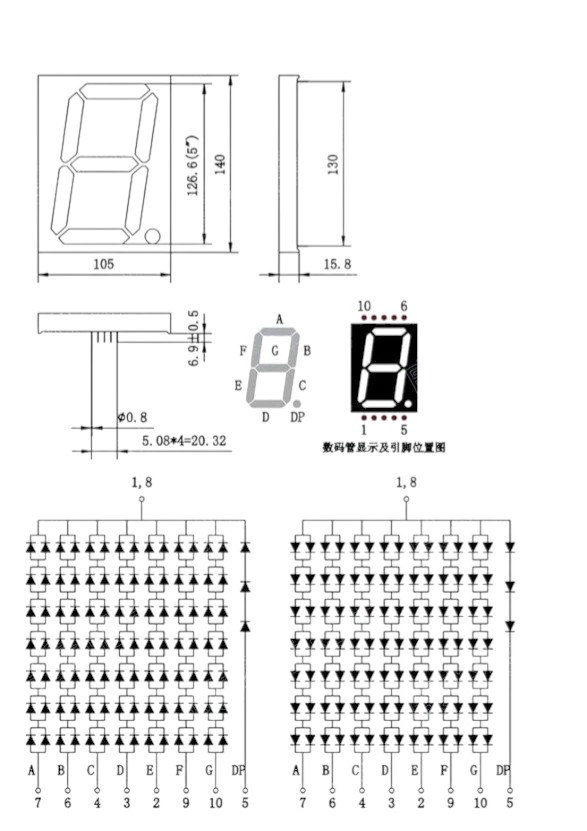
- Digit Height: 5.0 inches (126.6mm).
- Module Dimensions: Approximately 105.0 x 140.0 x 16.0 mm.
- Connection Type: Common Anode
- Color: Typically Super Red with a black surface and white segments.
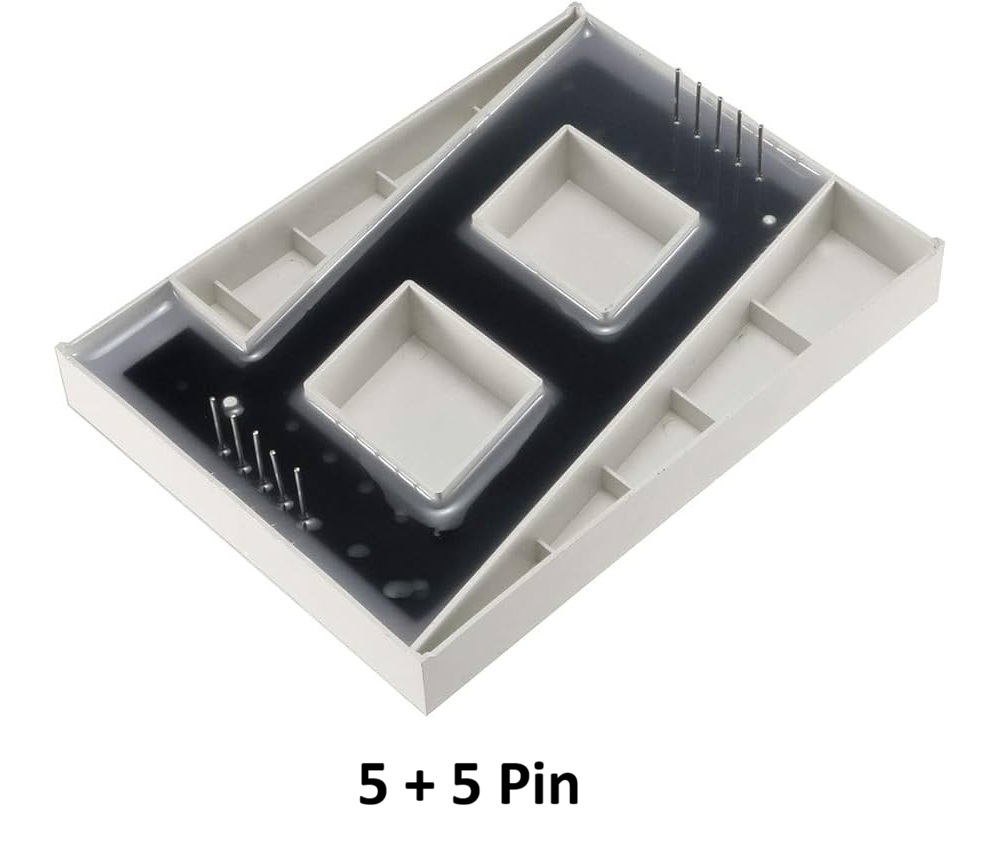
- Pin Configuration: 10 pins total, with pins 1 and 8 usually serving as the common pins.
- Electrical Requirements: Operates with a forward current of approximately 20mA–30mA per segment. Due to its large size, it requires a higher forward voltage (often cited between 12V and 18V for segments) compared to smaller displays.
Applications
- These large-scale displays are designed for high visibility in indoor and outdoor settings.
- Industrial Panels: Used in instrument panels and digital readout displays.
- Public Signage: Found in digital clocks, gas station price signs, and scoreboards.
- Elevators: Frequently used for floor indicators due to their wide viewing angle.
Connection & Voltage Requirements
Because this is a large 5-inch display, it requires significantly higher voltage than standard small LEDs.
- Forward Voltage: Most segments require between 12V and 12.5V to illuminate properly.
- Decimal Point (DP): The DP typically has a lower forward voltage (around 5.5V) because it contains fewer LEDs in series compared to the full segments.
- Driving Logic: For a Common Anode display, you connect the common pins (1 and 8) to your positive supply and pull the individual segment pins (a-g) to Ground (Low) to turn them on.
Caution: Always use current-limiting resistors for each segment to prevent burning out the LEDs. Due to the high voltage requirements, you may need a transistor driver (like a ULN2003 or TPIC6B595) if controlling this from a 5V microcontroller like an Arduino.
Related Products
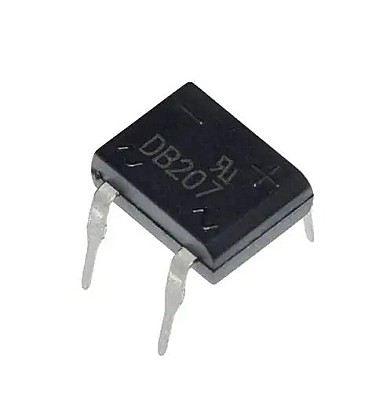
Bridge Rectifier IC (DB207) 1000V-2A
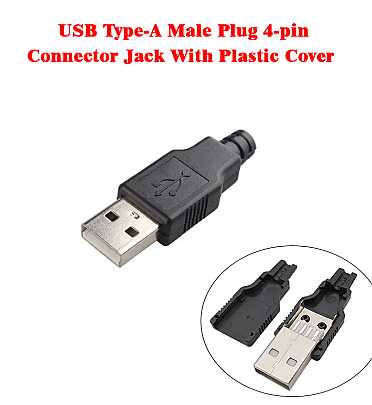
USB Type-A Male Plug 4-pin Connector Jack With Plastic Cover
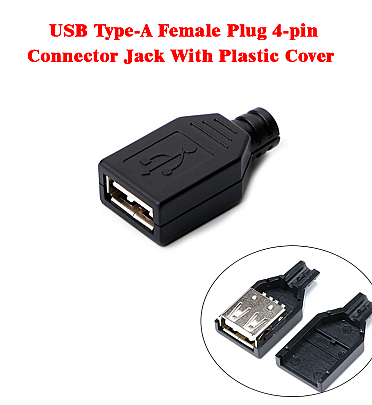
USB Type-A Female Plug 4-pin Connector Jack With Plastic Cover
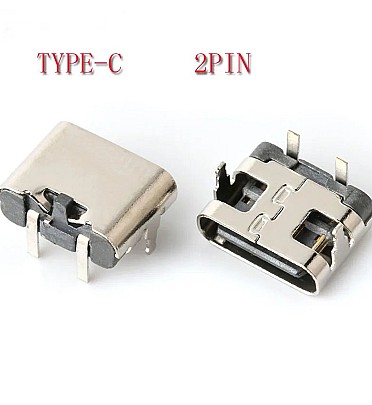
Female USB Connector Type C - 2Pin
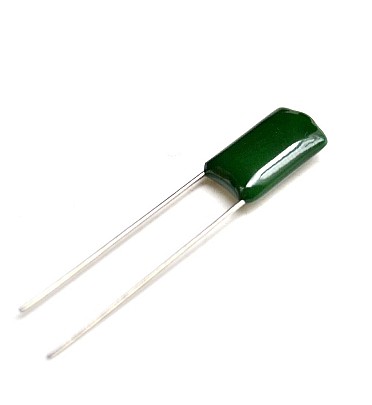
Polyester Film Capacitors 470NF/100V (474J)
-cover.jpg)
Ceramic Capacitors 47NF/50V (473)
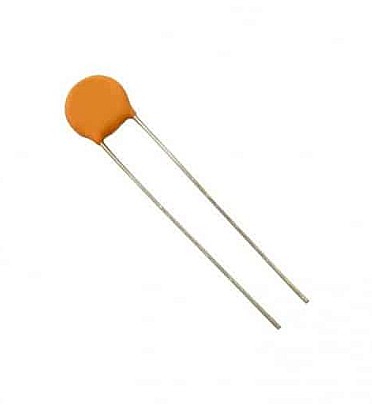
Ceramic Capacitors 330PF/50V (331)